




12
Jun

Refrigeration system for Data Center
Year
2024
Installation Location
Germany
Project
Airmatik
Application
Server room cooling
Delivered Power
790 kW
Operating Temperature
11 – 14 °C
From streaming our favorite series to managing global financial systems, data centers are the beating heart of our digital lives. But with this growing dependence also comes a major responsibility: energy consumption.
Today, data centers account for approximately 1–2% of global electricity usage, a percentage expected to rise with the expansion of artificial intelligence, cloud computing, and digital infrastructure. One of the main drivers of consumption? Cooling. Maintaining optimal temperatures in server rooms is not just a matter of performance, it’s essential to ensure reliability, operational continuity, and security.
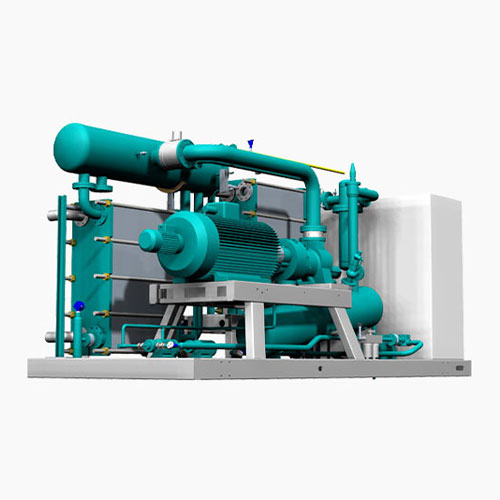
In 2024, Zudek built a refrigeration system for a major data center located in Germany. The goal was clear: ensure energy efficiency in cooling, reduce environmental impact, and guarantee maximum reliability.
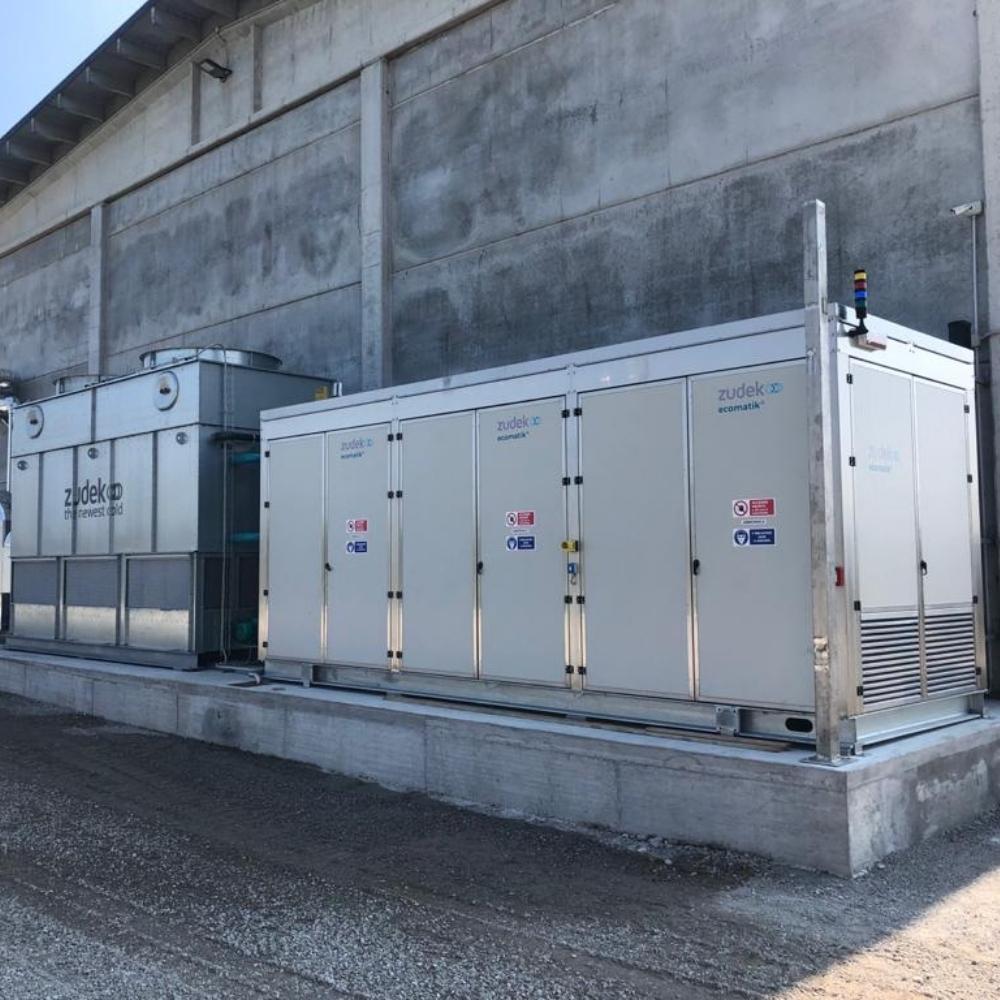
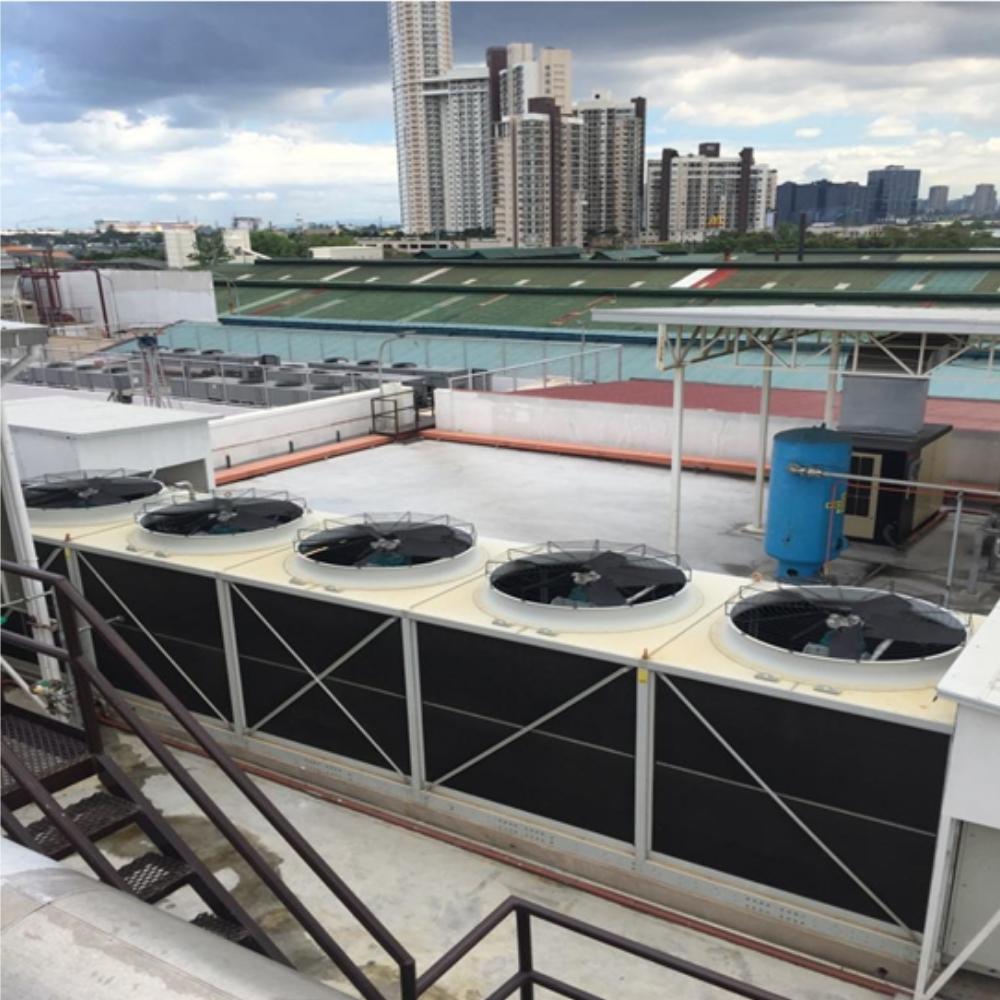
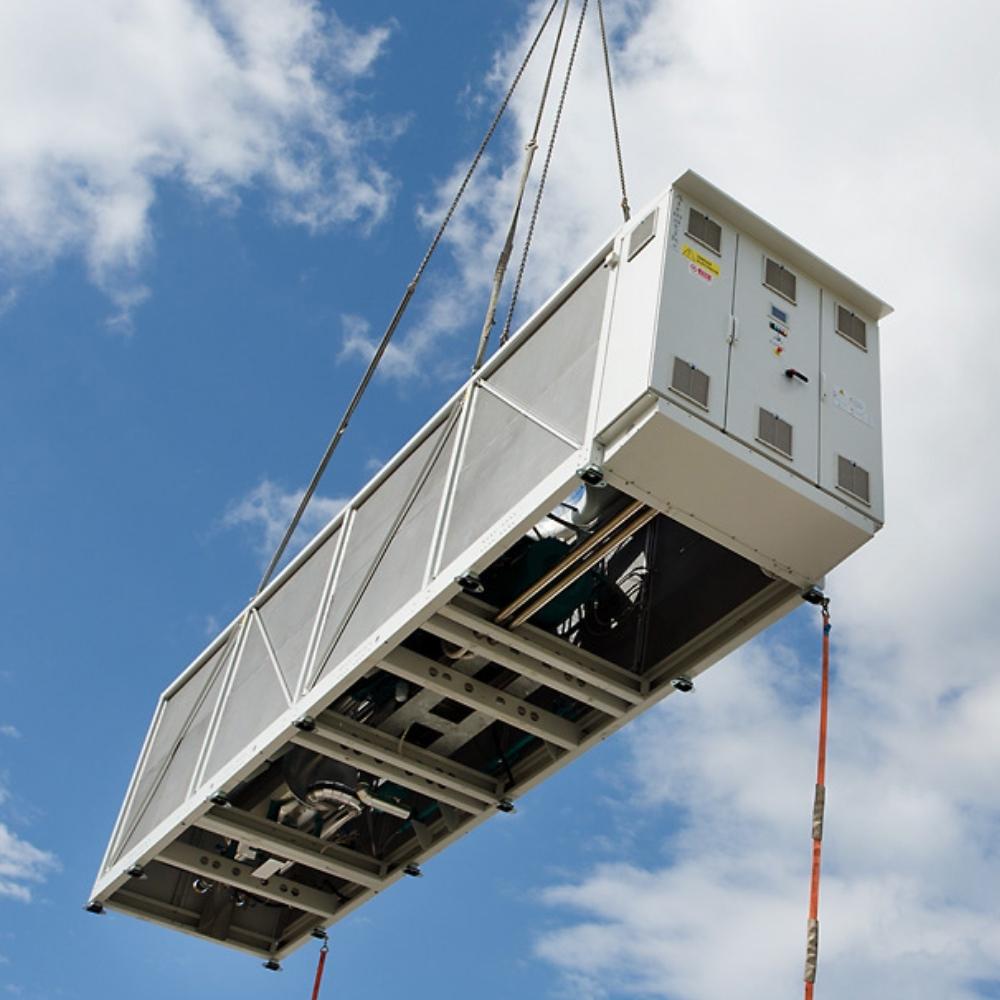
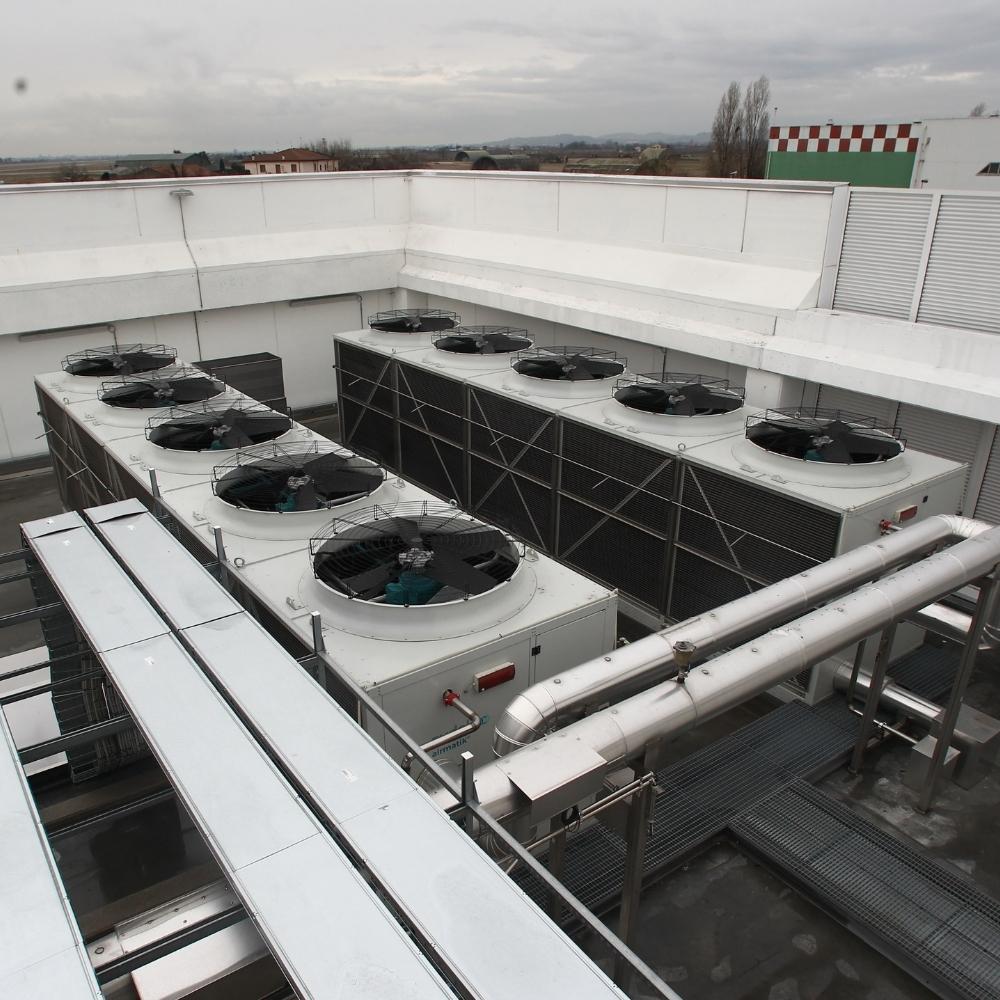
We installed a 6-module Airmatik with a cooling capacity of 790 kW, designed to maintain stable temperatures at 11°C or 14°C, depending on operating conditions. The system integrates an advanced free cooling setup, using a dry cooler and an intermediate plate heat exchanger. This exchanger allows glycol to circulate exclusively between the chiller and dry cooler, without entering the system, significantly reducing the overall use of glycol and its environmental impact. During colder months, the system enables direct use of outside air to cool the glycol/water, lowering compressor activity and cutting energy consumption.
As with all Zudek solutions, we chose ammonia as the refrigerant for this project. Ammonia is the most sustainable refrigerant available on the market, with GWP = 0 and ODP = 0, making it the ideal choice for high-energy-demand environments like data centers.
Our technology allows us to:
This project demonstrates how sustainable industrial refrigeration can be a strategic ally for the IT sector. Innovative solutions such as low-charge ammonia chillers and free cooling systems with intermediate exchangers make it possible to significantly reduce energy consumption and environmental impact, while maintaining high performance and reliability.
In an increasingly digital world, where energy demand is rising and sustainability is a priority, smart cooling is no longer optional, it’s essential.